
Knowing when to replace your tyres is one of the most important safety checks for any driver. In the UK, tyres must meet legal standards, but many drivers wait too long and only replace them when it becomes urgent.
Tyres do not fail suddenly. They show clear warning signs first. Understanding these signs helps avoid reduced grip, longer braking distances and increased risk in wet conditions.
This guide explains exactly when tyres should be replaced, what to look for, and how to stay safe and compliant.
When Should You Replace Tyres?
You should replace your tyres when:
- Tread depth reaches 1.6mm (UK legal limit)
- Tyres show visible damage such as cracks or bulges
- Grip noticeably reduces, especially in wet conditions
- Tyres are older than 5–6 years
- Uneven wear appears across the tyre
Even before the legal limit, many experts recommend replacing tyres at around 3mm for better safety in rain.
What Is the Legal Tyre Tread Depth in the UK?
The legal minimum tread depth in the UK is:
1.6mm across the central three-quarters of the tyre
Driving below this limit can result in:
- Fines up to £2,500 per tyre
- 3 penalty points per tyre
- Increased accident risk
However, waiting until 1.6mm is not ideal for safety.
Why 3mm Is a Safer Replacement Point
While 1.6mm is the legal minimum, tyre performance drops before that.
At around 3mm tread depth:
- Wet grip begins to reduce
- Braking distances increase
- Aquaplaning risk rises
Many garages recommend replacing tyres at this stage, especially for drivers who use motorways regularly.
How to Check Tyre Tread Depth
There are simple ways to check tread depth.
1. Tread Wear Indicators
Most tyres have built-in markers inside the grooves.
When the tread wears down to the level of these markers, the tyre is close to the legal limit.
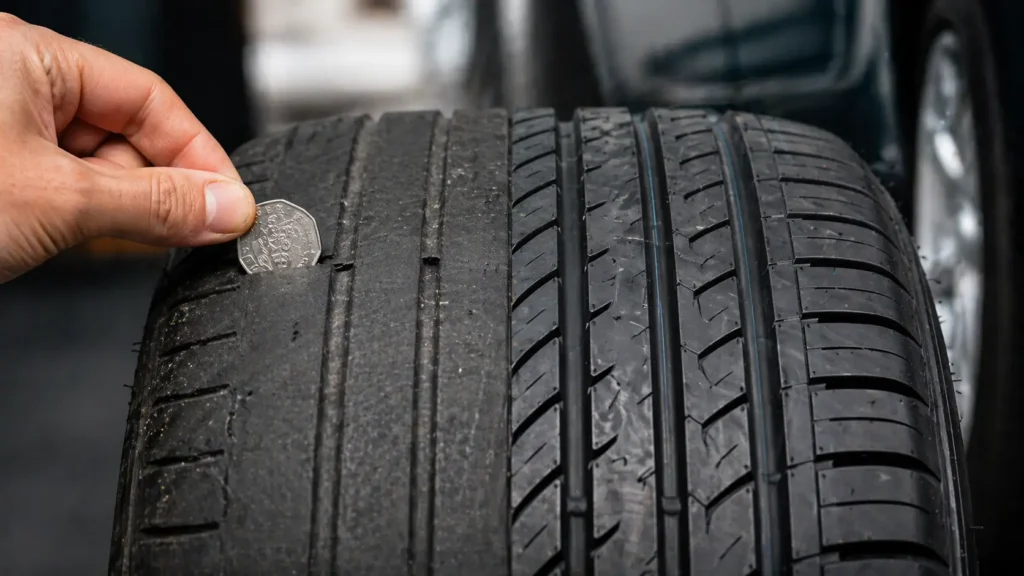
2. 20p Coin Test (UK Method)
Insert a 20p coin into the tread.
- If the outer band is visible, the tyre may be below the safe limit
- If covered, the tread is still within legal depth
This is a quick check, but not as precise as a gauge.
3. Tyre Depth Gauge
A gauge provides the most accurate reading.
Checking multiple points across the tyre helps identify uneven wear.
Signs Your Tyres Need Replacing
Tread depth is not the only factor. Several other warning signs indicate it is time to replace tyres.
1. Uneven Tyre Wear
If one side of the tyre is more worn than the other, it may indicate:
- Incorrect wheel alignment
- Suspension issues
- Improper tyre pressure
Uneven wear reduces grip and shortens tyre lifespan.
2. Cracks in the Sidewall
Small cracks in the rubber can appear over time.
These are often caused by:
- Age
- Exposure to sunlight
- Temperature changes
Cracked tyres can weaken and are more likely to fail.
3. Bulges or Blisters
A bulge in the tyre sidewall indicates internal damage.
This is usually caused by:
- Impact with potholes
- Hitting kerbs
Bulges increase the risk of sudden tyre failure and should be replaced immediately.
4. Reduced Grip in Wet Conditions
If the vehicle feels less stable in rain or takes longer to stop, tyres may be worn.
Loss of grip is often one of the first signs tyres are no longer performing properly.
5. Increased Road Noise or Vibration
Unusual vibration or noise can indicate:
- Uneven wear
- Internal tyre damage
- Balance issues
If this appears suddenly, tyres should be checked.
6. Tyre Age
Even if tread depth looks fine, tyres degrade over time.
Most manufacturers recommend replacing tyres after 5 to 6 years.
Rubber hardens with age, reducing grip and flexibility.
How Driving Style Affects Tyre Life
Tyre lifespan depends heavily on how the vehicle is driven.
Factors that increase wear include:
- Frequent hard braking
- Fast cornering
- Driving on rough roads
- Carrying heavy loads
Smoother driving habits can extend tyre life significantly.
Why Replacing Tyres on Time Matters
Delaying tyre replacement can affect several aspects of driving.
Safety
Worn tyres reduce braking performance and increase stopping distances.
Fuel Efficiency
Worn or underinflated tyres increase rolling resistance, leading to higher fuel consumption.
Legal Compliance
Driving with illegal tyres can result in fines and penalty points.
Vehicle Performance
New tyres improve grip, handling and overall driving stability.
Should You Replace All Tyres at Once?
Not always.
If only two tyres need replacing, they should usually be fitted to the rear axle, regardless of whether the vehicle is front or rear-wheel drive.
This helps maintain stability, especially in wet conditions.
Seasonal Considerations
Tyre wear often becomes more noticeable during certain times of the year.
Winter
Cold and wet roads highlight reduced tread performance.
Summer
Heat and long journeys can accelerate wear, especially on motorways.
Checking tyres before seasonal changes helps avoid last-minute replacements.
Quick Checklist
Replace your tyres if you notice:
- Tread close to 1.6mm
- Reduced grip in wet weather
- Cracks, bulges or visible damage
- Uneven wear patterns
- Tyres older than 5–6 years
Conclusion
Knowing when to replace your tyres is essential for safe driving.
While the legal limit in the UK is 1.6mm, replacing tyres earlier — around 3mm — provides better safety, especially in wet conditions.
Regular checks and early replacement help avoid emergency situations, reduce risk and keep vehicles performing properly.