
Uneven tyre wear is one of the most common warning signs that something is wrong with a vehicle.
Many drivers only notice tyre wear when replacing tyres, but by then the problem may already have affected handling, fuel economy and safety.
Tyres should wear evenly across the tread. If one area wears faster than another, it usually points to issues such as wheel alignment problems, incorrect tyre pressure, suspension faults or driving habits.
Understanding what causes uneven tyre wear helps drivers identify problems early, reduce tyre replacement costs and improve vehicle safety.
What Causes Uneven Tyre Wear?
The most common causes of uneven tyre wear are:
- Incorrect wheel alignment
- Wrong tyre pressure
- Worn suspension components
- Unbalanced wheels
- Aggressive driving habits
- Damaged roads and potholes
Different wear patterns often indicate different mechanical problems.
Why Uneven Tyre Wear Matters
Uneven wear is more than just a cosmetic issue.
It can lead to:
- Reduced grip
- Longer braking distances
- Increased fuel consumption
- Road noise and vibration
- Shorter tyre lifespan
In severe cases, uneven wear can make a tyre unsafe before the tread reaches the legal limit.
Common Types of Uneven Tyre Wear
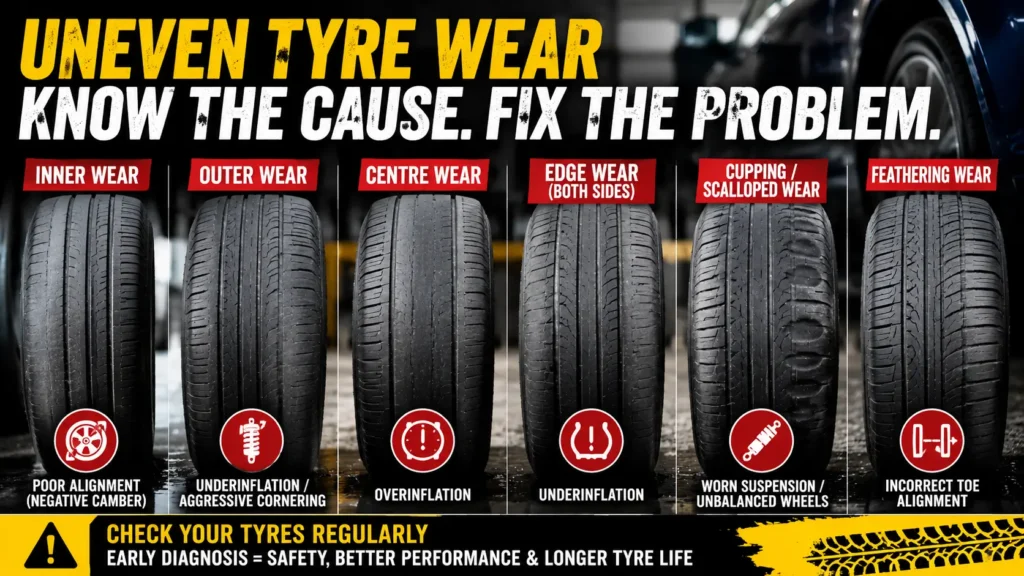
The wear pattern on a tyre often reveals the cause of the problem.
1. Inner Edge Tyre Wear
Inner tyre wear happens when the inside edge of the tyre wears faster than the rest of the tread.
Common Causes
- Incorrect wheel alignment
- Excessive negative camber
- Suspension issues
This is one of the most common tyre wear problems in modern vehicles.
Signs
- Smooth wear on the inside edge
- Vehicle pulling slightly to one side
- Reduced tyre lifespan
How to Fix It
A professional wheel alignment check is usually required.
Suspension components may also need inspection if alignment alone does not solve the issue.
2. Outer Edge Tyre Wear
Outer edge wear occurs when the outside shoulder of the tyre wears faster.
Common Causes
- Underinflated tyres
- Aggressive cornering
- Alignment problems
Signs
- Excess wear on outer tread blocks
- Reduced handling performance
How to Fix It
Check tyre pressure regularly and correct alignment if necessary.
3. Centre Tyre Wear
If the middle of the tyre wears faster than the edges, the tyre is usually overinflated.
Common Causes
- Excessive tyre pressure
Why It Happens
Too much air pressure causes the centre of the tyre to carry more load than the shoulders.
How to Fix It
Adjust tyre pressure to the manufacturer’s recommended level.
Correct pressures are usually found:
- Inside the driver’s door frame
- In the vehicle handbook
4. Edge Wear on Both Sides
When both edges wear faster than the centre, tyres are often underinflated.
Common Causes
- Low tyre pressure
Why It Happens
Underinflated tyres flatten excessively, increasing pressure on both shoulders.
Risks
- Increased fuel consumption
- Overheating
- Reduced tyre lifespan
How to Fix It
Maintain correct tyre pressure and check tyres regularly.
5. Cupping or Scalloped Wear
This appears as uneven dips or patches around the tyre tread.
Common Causes
- Worn suspension components
- Unbalanced wheels
- Damaged shock absorbers
Signs
- Loud road noise
- Steering vibration
- Uneven ride quality
How to Fix It
The suspension system and wheel balancing should be inspected.
6. Feathering
Feathering happens when tread ribs become smooth on one side and sharp on the other.
Common Causes
- Incorrect toe alignment
Signs
- Tyres feel rough when touched by hand
- Increased road noise
How to Fix It
A wheel alignment adjustment is normally required.
How Wheel Alignment Affects Tyre Wear
Wheel alignment is one of the biggest causes of uneven tyre wear.
Alignment refers to the angles of the wheels relative to the road and each other.
If alignment is incorrect:
- Tyres scrub against the road surface
- Wear increases rapidly
- Handling becomes unstable
Even small alignment problems can shorten tyre lifespan significantly.
How Tyre Pressure Affects Wear
Incorrect tyre pressure is another major cause of uneven wear.
Overinflation
Causes centre wear and reduced road contact.
Underinflation
Causes shoulder wear and overheating.
Checking pressures monthly helps prevent premature wear.
Suspension Problems and Tyre Wear
Suspension components help tyres maintain proper road contact.
Worn components can cause tyres to bounce or tilt incorrectly.
Common suspension-related causes include:
- Worn shock absorbers
- Damaged springs
- Worn control arms
These issues often lead to irregular wear patterns.
How Driving Habits Affect Tyres
Driving style also influences tyre wear.
Aggressive Driving
Hard braking and fast cornering increase wear on tyre shoulders.
High-Speed Driving
Motorway driving can accelerate centre wear if pressures are too high.
Heavy Loads
Carrying excess weight increases stress on tyres and suspension.
Poor Road Conditions and Potholes
UK roads often expose tyres to:
- Potholes
- Kerb impacts
- Uneven surfaces
These impacts can:
- Knock wheels out of alignment
- Damage suspension components
- Create uneven tyre wear quickly
After hitting a major pothole, tyres and alignment should be checked.
How to Prevent Uneven Tyre Wear
Preventing uneven wear helps extend tyre life and improve safety.
Check Tyre Pressure Regularly
Monthly pressure checks help maintain even wear.
Rotate Tyres
Tyre rotation helps distribute wear more evenly.
Get Wheel Alignment Checked
Alignment should be checked:
- After hitting potholes
- After suspension repairs
- If the vehicle pulls to one side
Inspect Tyres Frequently
Look for:
- Uneven tread patterns
- Cracks or bulges
- Low tread depth
Early detection reduces repair costs.
When Tyres Should Be Replaced
Tyres should be replaced if uneven wear becomes severe.
Signs include:
- Exposed cords
- Large worn patches
- Tread below legal limit
Driving on severely uneven tyres increases accident risk.
Quick Summary
Uneven tyre wear is usually caused by:
- Wheel alignment problems
- Incorrect tyre pressure
- Suspension faults
- Driving habits
Understanding tyre wear patterns helps identify problems early and prevents expensive repairs.
Conclusion
Uneven tyre wear should never be ignored.
Different wear patterns often point directly to mechanical or maintenance issues that affect safety, handling and tyre lifespan.
Regular tyre inspections, correct tyre pressure and proper wheel alignment help ensure tyres wear evenly and perform safely on UK roads.