
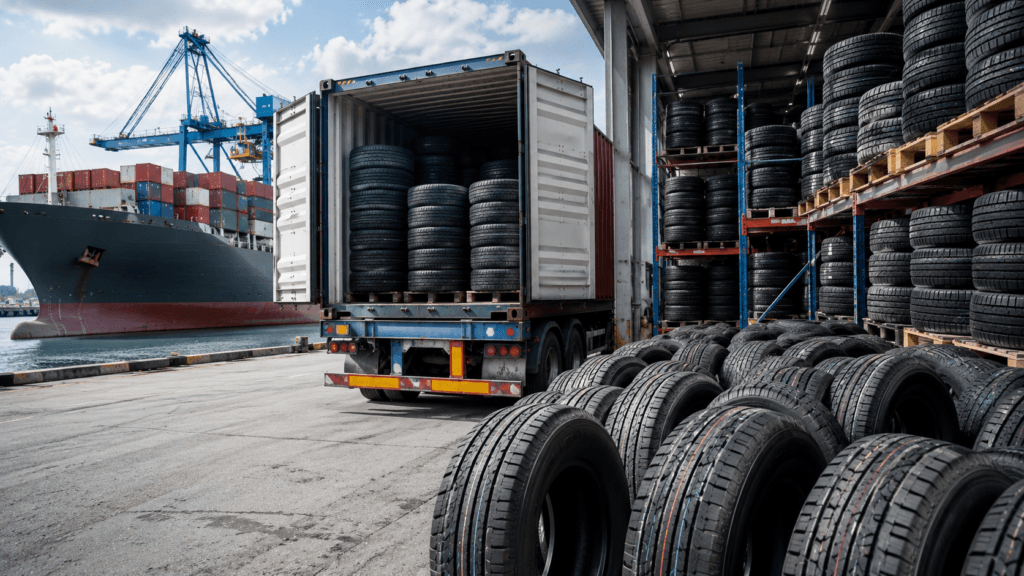
The UK tyre market depends heavily on international supply chains. Most tyres sold across garages, dealerships and online retailers are imported from manufacturers based in Europe and Asia.
For tyre wholesalers, sourcing products from global manufacturers is about far more than simply buying stock. It involves managing supply chains, checking compliance standards, negotiating shipping logistics and ensuring reliable stock availability for UK customers.
Understanding how UK tyre wholesalers source tyres helps explain why pricing, availability and delivery times can vary across the market.
How Do UK Tyre Wholesalers Source Tyres?
UK tyre wholesalers source tyres by:
- Working directly with global tyre manufacturers
- Importing tyres through authorised distributors
- Managing international shipping and logistics
- Ensuring tyres meet UK and EU safety standards
- Supplying garages, retailers and fleet operators across the UK
Most wholesale tyres sold in the UK are imported from manufacturing hubs in Europe, China, Thailand, Vietnam and other major production regions.
Why the UK Relies on Imported Tyres
The UK imports the majority of its tyres because global manufacturing is concentrated in countries with large-scale production facilities.
Major tyre production regions include:
- China
- Thailand
- Vietnam
- South Korea
- Germany
- France
- Turkey
These countries manufacture tyres for:
- Passenger cars
- SUVs and 4x4s
- Vans and commercial vehicles
- Trucks and fleets
Large international factories produce tyres at volumes that support worldwide distribution.
How Tyre Wholesalers Work With Manufacturers
Wholesale tyre suppliers usually source products in two main ways.
1. Direct Manufacturer Agreements
Large wholesalers often work directly with tyre manufacturers.
This allows them to:
- Purchase tyres in bulk quantities
- Secure better pricing
- Access consistent supply volumes
- Receive priority stock allocation
Direct relationships are common with major global tyre brands.
2. Authorised Import and Distribution Networks
Some wholesalers source tyres through authorised distributors or import partners.
This route is common for:
- Mid-range tyre brands
- Specialist tyres
- Regional manufacturers
It allows wholesalers to expand product ranges without managing factory relationships directly.
What Tyre Wholesalers Look for When Sourcing Tyres
Wholesale buyers evaluate more than just price.
Several factors influence sourcing decisions.
1. Product Quality
Tyres must meet strict performance and safety expectations.
Wholesalers assess:
- Wet grip performance
- Durability
- Tread design
- Manufacturing consistency
Poor-quality tyres can damage customer trust and increase warranty claims.
2. UK and EU Compliance Standards
Tyres imported into the UK must comply with safety and labelling regulations.
This includes:
- UKCA or E-mark approval
- EU tyre label requirements
- Load and speed rating compliance
Wholesalers verify these standards before supplying tyres into the market.
3. Reliable Supply Availability
Supply consistency is critical for tyre wholesalers.
Garages and fleet operators rely on wholesalers to maintain stock availability throughout the year.
Wholesalers therefore prioritise manufacturers with:
- Stable production capacity
- Reliable export operations
- Consistent delivery schedules
4. Product Range Coverage
Wholesale customers often require a wide range of tyre sizes and categories.
Wholesalers source products covering:
- Budget tyres
- Mid-range tyres
- Premium brands
- SUV and 4×4 tyres
- Van and commercial tyres
- Seasonal and all-season tyres
Broad stock availability helps wholesalers serve more trade customers.
How Tyres Are Imported Into the UK
Once tyres are manufactured, they move through international shipping networks before reaching UK warehouses.
The process typically includes:
Factory Production
Tyres are produced and quality checked at manufacturing plants.
Container Shipping
Tyres are packed into shipping containers and transported by sea freight.
Major shipping routes connect Asia and Europe with UK ports.
Customs and Import Clearance
Imported tyres must pass customs procedures and documentation checks.
This includes:
- Import duties
- Product documentation
- Safety compliance verification
UK Warehousing
After clearance, tyres are stored in UK distribution centres before being supplied to trade customers.
Why Shipping Costs Affect Tyre Prices
Shipping is one of the biggest factors influencing tyre pricing.
Costs can rise due to:
- Fuel prices
- Shipping container shortages
- Port congestion
- Global trade disruptions
When freight costs increase, wholesale tyre prices often rise across the market.
This is why tyre prices can fluctuate throughout the year.
How Wholesale Tyres Reach Garages and Retailers
After arriving in the UK, tyres are distributed through wholesale supply networks.
Wholesale customers include:
- Independent garages
- Tyre fitting centres
- Vehicle dealerships
- Fleet operators
- Online tyre retailers
Fast delivery is important because garages often need replacement tyres quickly for customer vehicles.
Why Stock Availability Matters in the Tyre Industry
Tyre demand changes throughout the year.
Seasonal demand increases during:
- Winter months
- Heavy travel periods
- Fleet maintenance cycles
Wholesalers must forecast demand carefully to avoid stock shortages.
Popular tyre sizes can sell quickly during peak periods.
The Growing Demand for Budget and Mid-Range Tyres
The UK market has seen strong growth in budget and mid-range tyre demand.
Many wholesalers now source products from:
- Asian manufacturers
- Emerging international brands
- Private-label production facilities
These tyres help garages offer more price options to customers.
How Tyre Wholesalers Manage Quality Control
Reliable wholesalers carry out quality checks before tyres reach customers.
This may include:
- Supplier audits
- Product testing
- Batch inspections
- Compliance verification
Maintaining quality standards helps reduce returns and warranty claims.
Challenges Facing UK Tyre Wholesalers
The tyre wholesale industry faces several ongoing challenges.
Supply Chain Disruptions
Shipping delays and global events can affect stock availability.
Currency Fluctuations
Exchange rate changes can increase import costs.
Rising Logistics Costs
Warehousing and transport expenses continue to affect pricing.
Market Competition
Wholesalers compete on:
- Pricing
- Delivery speed
- Product availability
- Customer support
Why Wholesale Tyre Supply Is Important for the UK Market
Without tyre wholesalers, garages and retailers would struggle to maintain fast access to replacement tyres.
Wholesalers help ensure:
- Nationwide tyre availability
- Faster delivery times
- Competitive pricing
- Access to multiple tyre brands
They are a critical part of the UK automotive supply chain.
Quick Summary
UK tyre wholesalers source tyres from global manufacturers through direct agreements and authorised distribution networks.
The process includes:
- International sourcing
- Shipping and logistics
- Compliance checks
- Warehousing and distribution
Reliable sourcing helps wholesalers maintain stock availability and supply garages, fleets and retailers across the UK.
Conclusion
The UK tyre industry depends heavily on international manufacturing and wholesale distribution networks.
From factory sourcing and shipping logistics to warehousing and nationwide delivery, tyre wholesalers play a key role in keeping the UK automotive market supplied.
Understanding how wholesale tyres are sourced helps businesses and trade buyers make more informed decisions when choosing a tyre supplier.