
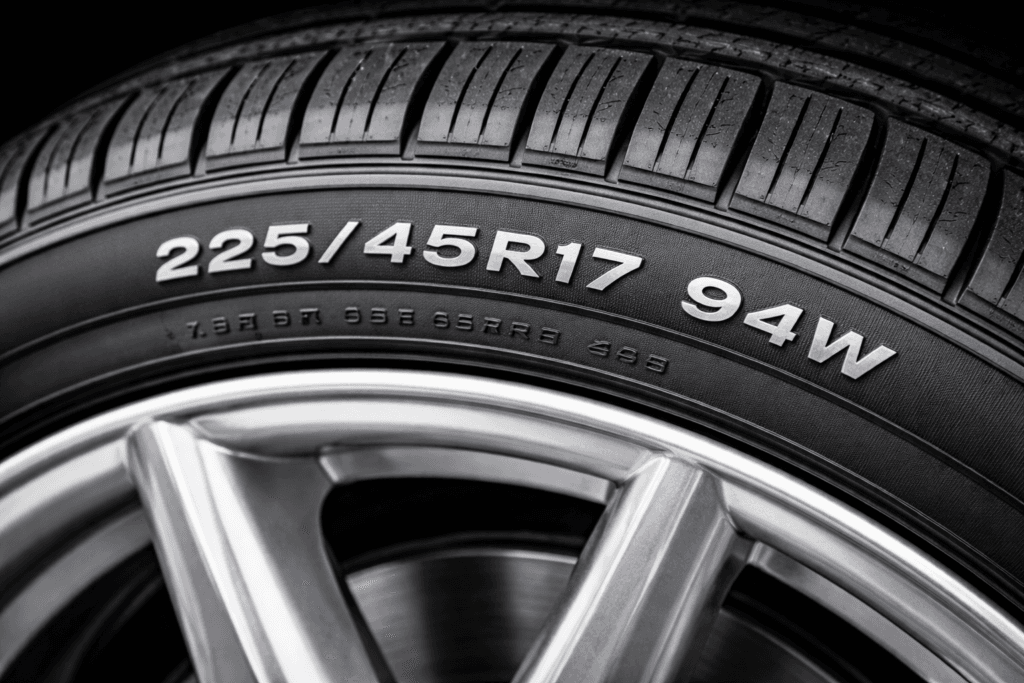
Most drivers look at the tyre size when buying replacements. Numbers like 225/45R17 or 255/65R18 are familiar.
But right after the size there are usually two more markings — something like 98V, 104W, or 91H.
These are not random codes. They show the load index and speed rating, and they are critical for safety, performance, insurance compliance, and vehicle handling.
Choosing the wrong rating can affect braking, tyre wear, stability, and legal compliance. That is why manufacturers specify exact ratings for every vehicle.
Understanding these codes helps drivers and garages choose the correct tyres and avoid costly mistakes.
What Is Tyre Load Index?
The load index is a number that indicates the maximum weight a tyre can safely carry when fully inflated.
It appears immediately after the tyre size.
Example:
225/55R18 98V
225/55R18 – tyre size
98 – load index
V – speed rating
The higher the load index number, the more weight the tyre can carry.
Each number corresponds to a specific maximum weight.
Common Load Index Examples
| Load Index | Maximum Load per Tyre |
|---|---|
| 91 | 615 kg |
| 94 | 670 kg |
| 98 | 750 kg |
| 102 | 850 kg |
| 104 | 900 kg |
| 106 | 950 kg |
| 109 | 1030 kg |
Because a car usually has four tyres, the combined load capacity must safely support the vehicle weight, passengers, and cargo.
For example:
A tyre with load index 98 supports 750 kg per tyre.
Four tyres together support 3000 kg total vehicle load capacity.
What Is Tyre Speed Rating?
The speed rating is a letter that indicates the maximum speed the tyre can safely sustain under load.
It appears directly after the load index.
Example:
225/55R18 98V
98 – load capacity
V – maximum speed capability
Speed ratings are based on laboratory testing under controlled conditions.
They do not mean drivers should reach these speeds on public roads. Instead, they show the tyre’s performance capability and heat resistance.
Common Speed Ratings
| Speed Rating | Maximum Speed |
|---|---|
| Q | 160 km/h (99 mph) |
| S | 180 km/h (112 mph) |
| T | 190 km/h (118 mph) |
| H | 210 km/h (130 mph) |
| V | 240 km/h (149 mph) |
| W | 270 km/h (168 mph) |
| Y | 300 km/h (186 mph) |
Most passenger vehicles in the UK commonly use H, V, or W rated tyres.
Why Load Index Matters for Safety
The load index ensures that tyres can safely carry the vehicle’s weight under real driving conditions.
If the rating is too low, several risks appear.
1. Overheating
Tyres carrying too much weight generate excess heat, which can lead to structural failure.
2. Increased Blowout Risk
Overloaded tyres are more likely to fail at motorway speeds.
3. Uneven Tyre Wear
Excess load causes premature shoulder wear and reduced lifespan.
4. Poor Handling
Vehicles may feel unstable, especially during cornering or braking.
Because of these risks, manufacturers always specify the minimum load index required.
Why Speed Rating Matters
The speed rating determines how well a tyre can handle heat buildup, cornering forces, and high-speed stability.
Higher ratings typically provide:
Stronger internal construction
Improved grip and stability
Better handling at motorway speeds
However, higher ratings can sometimes mean slightly firmer ride comfort due to stiffer tyre structures.
Can You Use a Higher Load Index?
Yes.
Using a higher load index than recommended is usually acceptable.
Example:
If the vehicle requires 98, you can install 102.
Benefits may include:
Stronger construction
Improved durability under heavy loads
Better performance for vans or SUVs carrying cargo
However, using a higher index may sometimes slightly affect ride comfort or rolling resistance.
Can You Use a Lower Load Index?
No.
Installing tyres with a lower load index than the manufacturer specification is unsafe and often illegal.
Risks include:
Structural tyre failure
Increased accident risk
Insurance invalidation
MOT failure
Vehicle manufacturers determine minimum ratings through extensive safety testing.
Can You Use a Higher Speed Rating?
Yes.
Using tyres with a higher speed rating is usually safe and common.
Example:
Replacing H-rated tyres with V-rated tyres.
Drivers may notice:
Improved handling
Better grip at motorway speeds
More responsive steering
Can You Use a Lower Speed Rating?
Sometimes — but only under specific conditions.
For example, winter tyres sometimes allow a lower speed rating if a speed warning sticker is placed inside the vehicle.
However, for normal tyres it is recommended to match or exceed the manufacturer specification.
Where to Find Load Index and Speed Rating on Your Tyres
The information is printed directly on the tyre sidewall.
Example marking:
245/45R19 102Y
Breakdown:
245 – tyre width in millimetres
45 – aspect ratio (sidewall height)
R – radial construction
19 – wheel diameter in inches
102 – load index
Y – speed rating
Drivers can also find the correct tyre ratings in:
The vehicle handbook
The tyre information label inside the driver door frame
The fuel filler flap (on some vehicles)
Why SUVs and Electric Vehicles Often Use Higher Load Ratings
Modern vehicles are becoming heavier, especially SUVs and electric cars.
This means tyres must carry more weight.
Examples include:
Electric vehicles with heavy battery packs
7-seat SUVs carrying passengers and luggage
Commercial vans carrying cargo
Because of this, tyres with load indexes above 100 are increasingly common.
What Happens If You Ignore Tyre Ratings?
Ignoring manufacturer tyre specifications can lead to several problems.
Safety Issues
Incorrect tyres can reduce grip, braking efficiency, and stability.
Legal and Insurance Problems
If tyres do not meet manufacturer standards, insurance claims may be rejected after an accident.
Faster Tyre Wear
Tyres may wear prematurely if they are not designed for the vehicle’s weight or speed.
MOT Failures
Incorrect tyre specifications can lead to inspection failures.
How Garages and Tyre Suppliers Use These Ratings
Professional tyre suppliers check both ratings before recommending replacements.
They consider:
Vehicle type
Typical driving conditions
Load requirements
Manufacturer recommendations
Matching the correct ratings ensures the tyres deliver safe and predictable performance.
Quick Summary
Load index and speed rating are two of the most important tyre specifications.
They tell drivers:
How much weight a tyre can carry
How fast it can safely operate
Using tyres that meet or exceed the manufacturer’s specification helps maintain vehicle safety, performance, and legal compliance.
Before buying tyres, always check the sidewall markings or consult a trusted tyre supplier to ensure the correct load index and speed rating are chosen.