
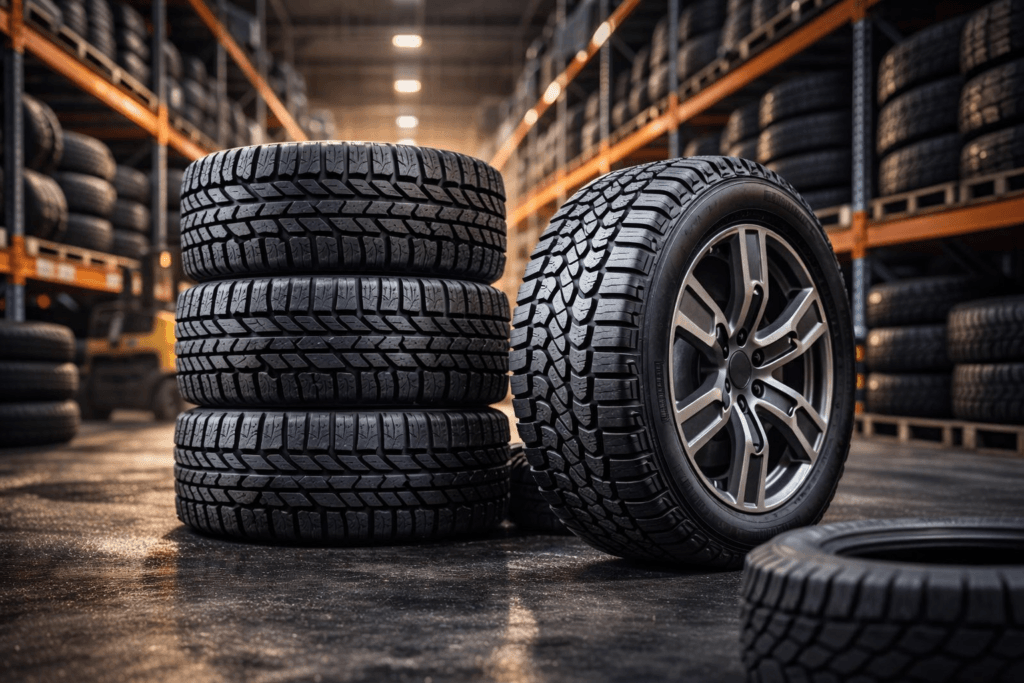
SUVs and 4×4 vehicles are heavier, taller and often more powerful than standard passenger cars. Because of this, they require tyres designed to handle greater weight, higher torque and varied driving conditions.
Not every tyre is suitable for these vehicles. Tyres built for SUVs and 4x4s are engineered with stronger construction, deeper tread patterns and higher load capacities to support the demands of larger vehicles.
Understanding what makes an SUV tyre different helps drivers choose tyres that provide better safety, durability and performance.
What Is an SUV or 4×4 Tyre?
SUV and 4×4 tyres are designed specifically for sport utility vehicles, crossovers and off-road capable vehicles.
These tyres are built to handle:
-
Heavier vehicle weight
-
Higher centre of gravity
-
Larger wheel sizes
-
Mixed road conditions
Compared with standard passenger car tyres, SUV tyres typically feature stronger internal construction and higher load ratings.
Stronger Construction for Heavier Vehicles
SUVs and 4×4 vehicles are significantly heavier than most passenger cars. Electric SUVs can be even heavier because of large battery packs.
Because of this, tyres must support greater loads without overheating or wearing prematurely.
SUV tyres are reinforced with:
-
Stronger internal belts
-
More durable sidewalls
-
Reinforced tread compounds
This added strength allows the tyre to carry more weight while maintaining stability and durability.
Higher Load Index Ratings
One of the most important specifications for SUV tyres is the load index.
The load index indicates the maximum weight a tyre can safely carry.
SUVs often require tyres with load indexes above 100, while smaller passenger vehicles may use tyres with ratings in the 90 range.
Higher load ratings ensure the tyre can safely support:
-
Vehicle weight
-
Passengers
-
Cargo or luggage
Using tyres with the correct load index helps maintain safety and proper handling.
Larger Tyre Sizes
SUVs and 4×4 vehicles often use larger wheel diameters and wider tyres.
Common SUV tyre sizes include:
-
225/65R17
-
235/60R18
-
255/55R19
-
275/45R20
Larger tyres improve road contact and stability, which is important for taller vehicles.
Wider tyres also provide better grip during acceleration and cornering.
Deeper Tread Patterns
Many SUV tyres feature deeper and more aggressive tread patterns.
This improves traction on different surfaces, including:
-
Wet roads
-
Gravel
-
Mud
-
Snow
Deeper tread patterns also help channel water away from the tyre, reducing the risk of aquaplaning during heavy rain.
All-Terrain vs Highway Terrain Tyres
SUV and 4×4 tyres are often divided into different categories depending on how the vehicle is used.
Highway Terrain (HT)
Highway terrain tyres are designed mainly for road driving.
They offer:
-
Smooth ride comfort
-
Lower road noise
-
Improved fuel efficiency
These tyres are common on SUVs used primarily for commuting and motorway driving.
All-Terrain (AT)
All-terrain tyres are built to handle both road and off-road surfaces.
They feature:
-
More aggressive tread patterns
-
Reinforced sidewalls
-
Improved traction on loose surfaces
These tyres are popular for drivers who regularly travel on gravel roads, mud or rough terrain.
Sidewall Strength and Durability
SUV tyres usually have stronger sidewalls than standard car tyres.
This helps protect the tyre from:
-
Impacts from potholes
-
Damage from rocks or rough terrain
-
Increased stress during cornering
Stronger sidewalls also improve stability, which is important for vehicles with a higher centre of gravity.
Speed Ratings and Performance
Many modern SUVs have powerful engines and high motorway performance.
Because of this, tyres must also meet appropriate speed rating requirements.
Common speed ratings for SUV tyres include:
-
H (210 km/h)
-
V (240 km/h)
-
W (270 km/h)
Higher speed ratings indicate that the tyre can safely handle higher speeds while maintaining structural stability.
Tyres Designed for Electric SUVs
Electric SUVs are becoming more common, and they create new demands for tyres.
Electric vehicles are heavier and produce instant torque, which can increase tyre wear.
Tyres designed for electric SUVs often feature:
-
Reinforced structures for higher vehicle weight
-
Special tread compounds to reduce wear
-
Low rolling resistance to improve range
These tyres help maintain durability while improving energy efficiency.
Why Using the Correct SUV Tyre Matters
Using tyres designed specifically for SUVs and 4×4 vehicles is important for several reasons.
Incorrect tyres can affect:
-
Vehicle stability
-
Braking performance
-
Tyre lifespan
-
Fuel efficiency
SUV tyres are engineered to handle the unique weight distribution and driving characteristics of larger vehicles.
Matching the tyre specification recommended by the vehicle manufacturer helps ensure safe and predictable driving performance.
Choosing the Right Tyre for an SUV or 4×4
When selecting tyres for an SUV or 4×4, several specifications should always be checked.
These include:
-
Tyre size
-
Load index
-
Speed rating
-
Driving conditions
-
Road or off-road usage
Drivers who mainly use their SUV on motorways may prefer highway terrain tyres, while those driving in rural or rough environments may benefit from all-terrain tyres.
Selecting the correct tyre type helps balance comfort, durability and performance.
The Growing Demand for SUV Tyres
SUVs have become one of the fastest-growing vehicle segments in the UK and worldwide.
As more drivers choose SUVs and crossovers, demand for specialised SUV tyres continues to increase.
Manufacturers are responding by developing tyres that improve:
-
Fuel efficiency
-
Wet grip
-
Durability
-
Noise reduction
These improvements help modern SUV tyres deliver better performance across a wide range of driving conditions.
Conclusion
SUV and 4×4 vehicles place greater demands on tyres than standard passenger cars.
Because of their heavier weight and different driving characteristics, they require tyres with stronger construction, higher load ratings and specialised tread patterns.
Understanding these differences helps drivers choose tyres that provide better safety, durability and performance.
Before purchasing new tyres, it is always important to check the vehicle manufacturer’s recommended specifications to ensure the correct tyres are installed.