
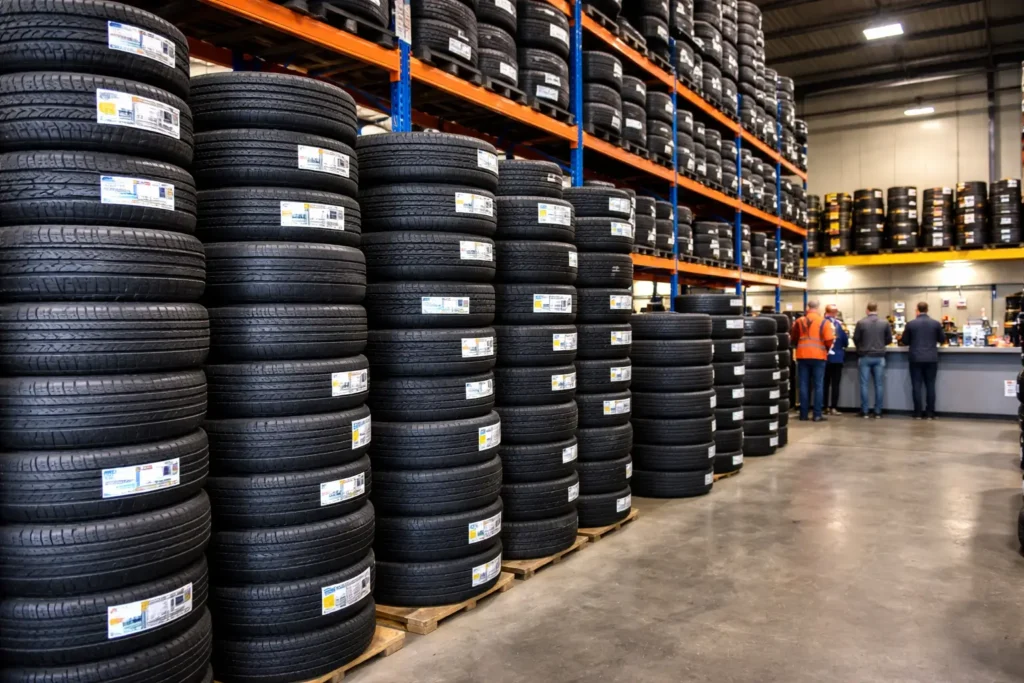
Wholesale tyre prices don’t move for one reason. They move because several costs hit the supply chain at the same time — and the mix changes month to month.
If you’ve ever wondered why the same size can be £6 cheaper this week, then jump again next month, this guide breaks it down in plain English.
The short version: what you’re really paying for
At wholesale level, tyre pricing is usually shaped by:
Raw materials (rubber-based inputs are the big one)
Energy and factory costs
Shipping, freight and handling
Currency movements
Import mix and trade policy
Demand patterns (seasonality, fleet cycles, consumer budgets)
Tyre spec (size, load index, speed rating, pattern, label performance)
Compliance and product changes (EU/UK rules, testing, redesigns)
European industry bodies have repeatedly pointed to the combined impact of raw materials, energy, logistics and labour on the market and pricing pressure.
1) Raw materials: the biggest driver nobody controls
Tyres are a materials-heavy product. When the inputs rise, wholesale prices usually follow — sometimes immediately, sometimes with a delay if brands had stock bought at older costs.
The main inputs include:
Natural rubber
Synthetic rubber (oil-linked)
Carbon black / silica fillers
Steel reinforcement
Chemicals and compounds
The key point: even small shifts in rubber or oil-linked inputs can ripple quickly into cost-per-tyre at manufacturing level. Industry analysis and manufacturer commentary consistently highlight rubber and oil-related inputs as major cost swing factors.
What this means for buyers:
If you’re shopping purely on “today’s price”, you’ll sometimes lose to someone who planned their buying around the market cycle.
2) Energy costs: Europe has been hit harder than some regions
Making tyres is energy-intensive. Mixing, curing, moulding and finishing all require power and stable production lines.
A useful way to think about energy is this:
When energy costs rise faster in one region, locally-made tyres become less price-competitive
That can push more buyers into imports
Which then changes availability, lead times, and wholesale pricing behaviour
ETRMA has noted that European tyre production costs — particularly energy — have increased faster than other regions, while demand for low-cost imports has risen.
3) Logistics and freight: tyres are bulky, not light
Tyres take space. Storage, palletisation, container space, inland transport, and last-mile handling all matter.
Even if factory prices stay flat, wholesale can move when:
Container or road freight rates jump
Warehousing costs increase
Supply routes change (new ports, new hubs, new delays)
In plain terms: tyres are not like small parcels. Logistics is a real chunk of cost — and it’s one reason the same tyre can be priced differently by suppliers with different supply chains.
4) Currency: why “the pound moved” shows up in your invoice
A lot of tyre supply into the UK is priced in non-GBP currencies somewhere in the chain.
So wholesale prices can shift when:
GBP weakens (imports effectively cost more)
Payment terms and hedging change for the supplier
A supplier restocks at a new exchange rate
This is also why you can see price movement with no obvious market news — the change is financial, not product-related.
5) Import mix and trade policy: why budget tyres can jump suddenly
Import volumes and sourcing regions influence:
availability
lead times
price competition
ETRMA’s reporting on EU27+UK import patterns shows how strongly import volumes can shift over time, which changes the competitive pressure in the wholesale market.
On top of that, trade policy can matter. Industry logistics analysis has flagged that future tyre price rises in 2026 may be driven more by regulatory and trade-policy factors than raw materials alone, including the risk of tariffs or quotas affecting imports.
What this means for garages:
Sometimes the “cheapest” bracket is the most volatile bracket.
6) Demand and seasonality: the quiet pricing lever
Wholesale pricing is also demand-led.
Examples:
Winter / all-season spikes can tighten availability
Fleet buying cycles can pull volumes forward
Household budget pressure can shift consumers toward cheaper imports (changing what wholesalers stock and promote)
ETRMA’s market updates show ongoing shifts in segments like all-season tyres and broader demand patterns.
Practical takeaway:
If your workshop waits until the last minute in peak season, you’re buying in the most expensive part of the cycle.
7) Tyre specifications: what changes the price inside the same size
Two tyres can both be “205/55R16” and still be priced far apart.
Common price drivers inside a size:
Load index and speed rating (strong impact)
XL / reinforced construction
Runflat
Pattern type (touring vs performance vs commercial)
Wet grip / rolling resistance label performance
Warranty positioning and brand tier
If you want to control cost without sacrificing safety, this is where the smart decisions happen — not by chasing the cheapest brand on the day.
8) Compliance and redesign costs: what’s coming down the road
Rules don’t just change labels — they change testing, compounds, and manufacturing.
Logistics/market analysts have highlighted upcoming EU requirements around abrasion-emission testing and compliance timelines, and noted that manufacturers are already investing in redesigns and factory upgrades — which can feed into cost.
Even if enforcement is later, the spending can start earlier — and wholesale buyers often feel those costs in the form of gradual price lifts rather than a single “price shock”.
How to get better wholesale pricing without gambling on quality
Here’s what actually works in the real world for garages, fitters and fleet buyers.
Buy earlier for seasonal demand (especially winter/all-season)
If you know your customer base and your common sizes, bringing forward your buying window reduces “panic pricing”.
Build your order around repeat-fit sizes
Wholesale pricing is often strongest where:
volumes are consistent
stock turns fast
suppliers can forecast demand
Be flexible on brand tier — not on safety spec
Don’t compromise on correct load/speed rating.
But consider having:
a trusted budget option
a mid-tier option
a premium option
…so you can protect your margin when one segment spikes.
Watch the “hidden cost” items
The cheapest unit price can become expensive if it causes:
returns
slow delivery
stockouts that lose fitting jobs
Reliability is part of your tyre cost, even if it’s not printed on the label.
A simple way to compare quotes properly
When comparing wholesale tyre prices, don’t just compare the number.
Compare:
exact spec (load/speed, XL/runflat)
delivery speed and cut-off times
stock depth (can you repeat order?)
whether the price is stable for reorders
return handling (real-world friction matters)
This stops you getting caught by “cheap today, painful tomorrow”.